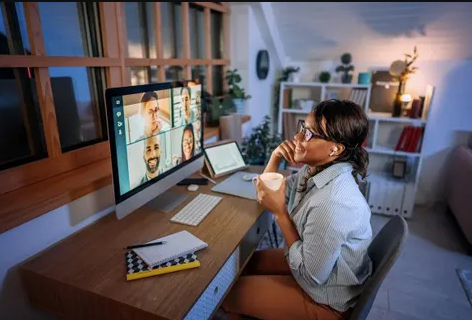
The landscape of remote learning is evolving rapidly. Innovative technologies are reshaping how students engage with educational content. Personalization and collaboration are becoming essential elements in this transformation. As gamification and dynamic environments emerge, they promise to enhance motivation and creativity among learners. However, the implications of these changes on educational equity and accessibility remain to be explored. What challenges and opportunities lie ahead in this new educational paradigm?
Emerging Trends in Remote Learning
A growing array of innovative strategies is reshaping the landscape of remote learning, reflecting a dynamic shift in educational paradigms.
Personalized learning empowers students to tailor their academic journeys, fostering autonomy.
Meanwhile, gamified experiences introduce engaging elements that enhance motivation and retention.
These trends highlight a commitment to individual freedom in education, enabling learners to explore and thrive in diverse, self-directed environments.
See also: The Future of Hybrid Work
Innovative Tools Transforming Education
As technology continues to evolve, innovative tools are increasingly transforming the educational landscape, enabling both educators and learners to engage more effectively.
Gamified learning engages students through interactive experiences, fostering motivation and retention.
Meanwhile, collaborative platforms facilitate communication and teamwork, breaking down traditional barriers.
Together, these advancements create a dynamic environment that nurtures creativity and empowers learners in their educational journeys.
Enhancing Educational Equity and Accessibility
While the advent of remote learning technologies has created unprecedented opportunities for education, it has also underscored the critical need for enhancing educational equity and accessibility.
Addressing the digital divide is essential to ensure that all learners benefit from these advancements.
Implementing inclusive practices can foster an environment where diverse voices thrive, ultimately empowering individuals to achieve their fullest potential in an increasingly interconnected world.
The Future Landscape of Virtual Classrooms
Emerging technologies are set to redefine the future landscape of virtual classrooms, transforming how educators and learners engage with one another.
Enhanced virtual collaboration tools will foster connections beyond geographical boundaries, while personalized learning experiences will cater to individual needs.
This synergy promotes autonomy in education, allowing learners to pursue knowledge at their own pace, ultimately reshaping the dynamics of remote learning.
Conclusion
In a world where personalized education reigns supreme, it is ironically the collective isolation of remote learning that fosters deeper connections among students. As innovative tools bridge gaps and gamified experiences ignite motivation, one might ponder: has technology truly liberated learners, or has it merely transformed the classroom into a digital playground? Ultimately, the future of remote learning may hinge not on the tools themselves, but on how these advancements reshape human interaction and collaboration in education.